


Adesso Italia

Modern Applications Engineering

We build custom applications integrating Agentic Coding from planning: agents write code, run tests; people oversee architectural decisions and guide strategic choices.

What you'll find on this page

A core application that truly differentiates a company from its competitors requires effort and expertise; a market solution costs less, but seldom adapts to the organization's specific processes. We integrate Agentic Coding into the application development flow from planning: agents work on the execution layer (code, tests, ...), people remain in control of the situational layer (architecture, negotiations with third parties, validation of legacy knowledge). Additionally, each application is born ready to be queried by agents. 

  • Challenges in Modern Applications Engineering 
  • The adesso.it method: execution layer and situational layer; 
  • Five Benefit Levels: real speed, project productivity, governance, capitalization over time, freedom of choice;

The problem: Three frictions that a custom application must overcome today

What are the 3 biggest challenges in Modern App Engineering

It's not just the old compromise between custom and market solutions. Agentic AI amplifies two silent problems until they manifest themselves mid-project.

The compromise between make and buy

Building custom requires time and specialized skills that are not always available internally. A market solution costs less but means accepting upfront that you won't differentiate on what truly matters for that business. Meanwhile, the cost of waiting increases: every month without the right application is a month where the competitive advantage remains theoretical.

Applications designed to be understood

Core business applications have almost always been built to be used by people: when the company introduces Agentic AI, they discover that they do not expose stable APIs, do not narrate their domain in an interrogable manner, and do not keep a usable track of what agents do. The acceleration halts at the threshold. The risk today is to repeat the same mistake with the new applications being built now.

The risk of focusing solely on technical productivity

Many organizations measure the success of Agentic AI only by looking at lines of code generated, tests produced, man-days saved on isolated activities, and deduce that the entire project proceeds faster. This is a risky inference: a real project also includes architectural choices, negotiations with external partners, and human validation of legacy knowledge.

The adesso.it method

How we work

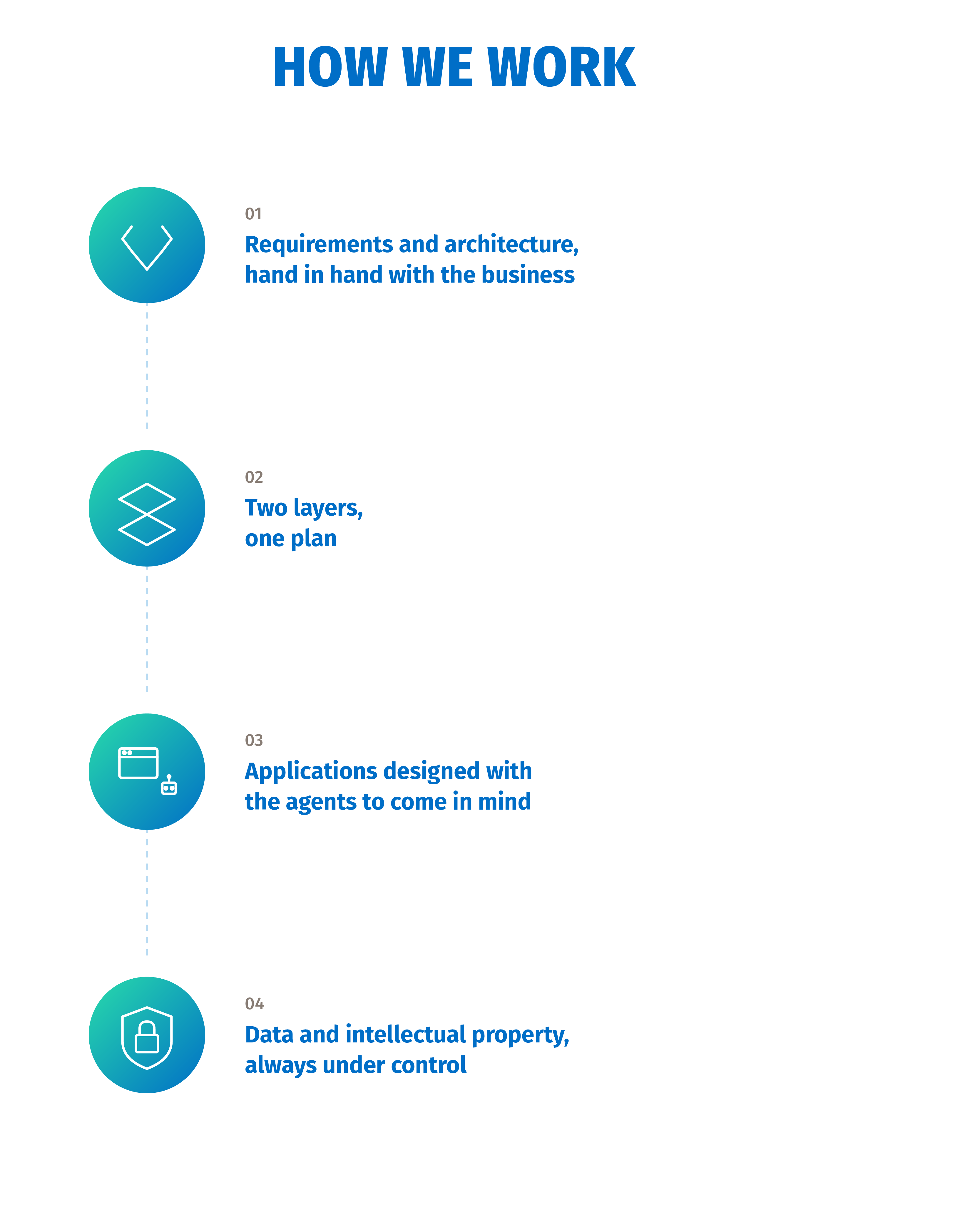
How we work, in four steps: requirements and architecture with the business, two layers and one plan, applications designed with future agents in mind, data and intellectual property under control

Agentic Coding integrated from planning, not added later 

 
Requirements and architecture: collaborating closely with the business 

We develop custom applications using state-of-the-art technologies and an agile approach. We work closely with the business from planning, deciding together what to assign to the execution layer and what remains in the situational layer: small, high-seniority teams, not large teams coordinated for billed hours. Traceability, verification, and governance are present from the first line of code, not added after when technical debt has already accumulated. Architectures remain cloud-native, based on microservices and frequent releases in DevOps style: this is the technical foundation on which the agentic work method is built. 

Two layers, one plan 

In planning, we explicitly distinguish an execution layer where agents work well on closed-specification activities (code writing, tests, refactoring on known patterns) from a situational layer where acceleration reduces almost to zero, because it requires context not reducible to specification: an architectural choice with cross-cutting impact, a compromise to negotiate with an external partner. 

Applications designed also for future agents 

In the same planning phase, we decide how to make new applications usable by agents as well as people: explicit domain semantics, native observability of every interaction. Thus, the application is not born already closed to the capabilities of Agentic AI that the company will introduce in the following months. The ownership of the result matters as much as the speed with which it is produced: the company remains the owner of the solution. 

Data and intellectual property, always under control 

The confidentiality of customer data remains a foundation of our work even in the choice of Agentic AI tools: we adopt technologies designed to protect data, prevent it from being used for external training, and safeguard the intellectual property of the code produced. In the agentic process of adSCAILE, the same principle translates into guardrails and security and compliance policies integrated into the harness that makes the agents work.

How to manage Agentic Coding on custom projects

The competitive advantage is not in the AI tool itself, it lies in the ability to manage its effects.

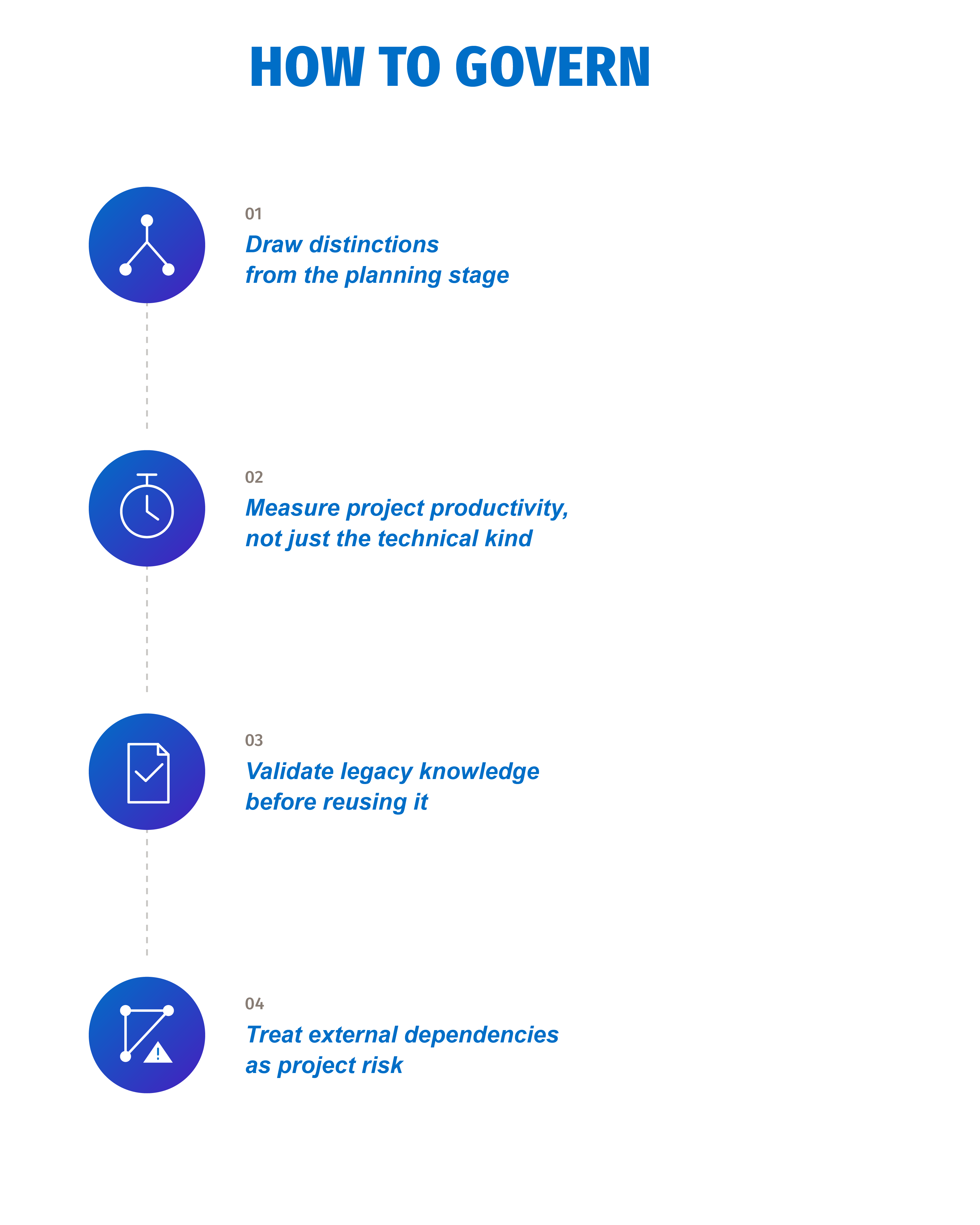
How to govern, in four practices: draw distinctions from the planning stage, measure project productivity, validate legacy knowledge before reusing it, treat external dependencies as project risk

Distinguishing from the planning stage 

What belongs to the execution layer, delegable to agents, and what belongs to the situational, decision-making layer, without assuming that technical acceleration will automatically propagate to the entire project. 

Measuring project productivity, not just technical productivity 

We track the actual time to release, not just the man-days saved on individual activities: it's the comparison of these two data that reveals where the bottleneck truly hides. 

Validate legacy knowledge before reusing it 

In brownfield projects, knowledge extracted by an agent from a legacy system is always subject to human verification before becoming input for new code: legacy systems often contain duplications and stratifications. 

Treat external dependencies as project risks 

Coordination with suppliers and third-party partners managed with dedicated owner and timelines, with the same rigor reserved for a technical risk: skipping this step, not an agent's limitation, stops projects.

1.Execution layer and situational layer

As per adesso.it's work method, we explicitly distinguish, already in the planning phase, what belongs to the execution layer (closed specification, verifiable independently by the agent) and what to the situational layer (decision-making, non-delegable).

The tangible benefits of modern app engineering

We measure the results brought by our approach on four levels.

The competitive advantage arises from the ability to know, project by project, where the autonomy of agents ends and where the governance of people begins, and to build applications readable even by agents who will use them tomorrow. It is a system design competence that generates effective and repeatable patterns: the same organizational capability produces one effective pattern in one sector and a different but coherent one in another, always starting from the same agentic engineering discipline matured over time. 

This way of working translates into 4 concrete results for the business.

1

Competitive advantage, in days

An enterprise application is built more quickly when small teams of senior professionals work together with agents on well-defined requirements. We track the actual time until release, not just the man-days saved on individual activities: that way we see where the real bottleneck is hidden.

2

Governance

The boundary between agent autonomy and human decision-making remains mapped and verifiable step by step, so technical debt and control debt do not accumulate together to become a constraint on growth.

3

An asset that increases in value

The application remains useful as the company introduces new agents: it was designed to be used by them too, not just by people. A closed app forces you to pay twice for the same work.

4

Freedom of choice

The company owns the code, the architecture, and the knowledge that ties them together, with the added benefit of being able to evolve it in the direction the business demands.

Frequently asked questions about Modern App Engineering

1.What is Modern App Engineering?

Modern App Engineering is the service with which adesso.it creates custom enterprise-level applications by integrating the agentic work method from the planning stage. Each project explicitly distinguishes an execution layer, entrusted to agents, from a situational layer, governed by people, and every application is designed to be usable by the AI agents the company will introduce in the coming months, not just by people.

2.What is the difference between the execution layer and the situational layer?

The execution layer includes activities with closed and verifiable specifications by the agent: coding, front-end and back-end testing, refactoring on known patterns, documentation. The situational layer includes decisions that require context that cannot be reduced to a specification: architectural choices with cross-cutting impacts, validation of knowledge extracted from legacy systems, coordination with external partners. The same AI initiative can accelerate in the first and remain stalled in the second, at the same time.

3.What does it mean to build an application ready for AI agents?

It means deciding, already in the planning phase, how to make the application usable by agents as well as people: stable contracts outward, explicit domain semantics, and native observability of every interaction. Without these three elements, the acceleration promised by agents stops at the threshold of the existing application.

4.Why is it risky to measure only the technical productivity of Agentic AI?

Because a real project is not made up of just technical tasks: it includes architectural choices, negotiations with external partners, and human validation of legacy knowledge. Inferring that the entire project proceeds faster by looking only at lines of code, tests produced, or man-days saved on individual activities is a risky inference. adesso.it tracks project productivity, meaning the actual time until release, not just technical productivity. 

FIND OUT MORE

Fill the form 
if you would like more details

form version: 1.0.0