
Digital Core Modernization
Application modernization, or Digital Core Modernization, makes applications more scalable, secure, quicker to release, and ready for integration with Agentic AI.
What will you find on the page?
- What it is: evolution of existing applications to make them more secure, scalable, and easy to release.
- Why now: reduce technical debt, increase delivery speed, improve compliance and security, attract talent.
- How: interventions on three dimensions: infrastructural, architectural, functional, combined according to the context.
- The approach by adesso.it: progressive roadmap, governance by metrics, continuous collaboration between business and IT, quality and observability as prerequisites
For an in-depth analysis of application modernization strategies in enterprise contexts, consult the dedicated whitepaper by adesso.it.
The problem companies face with legacy systems
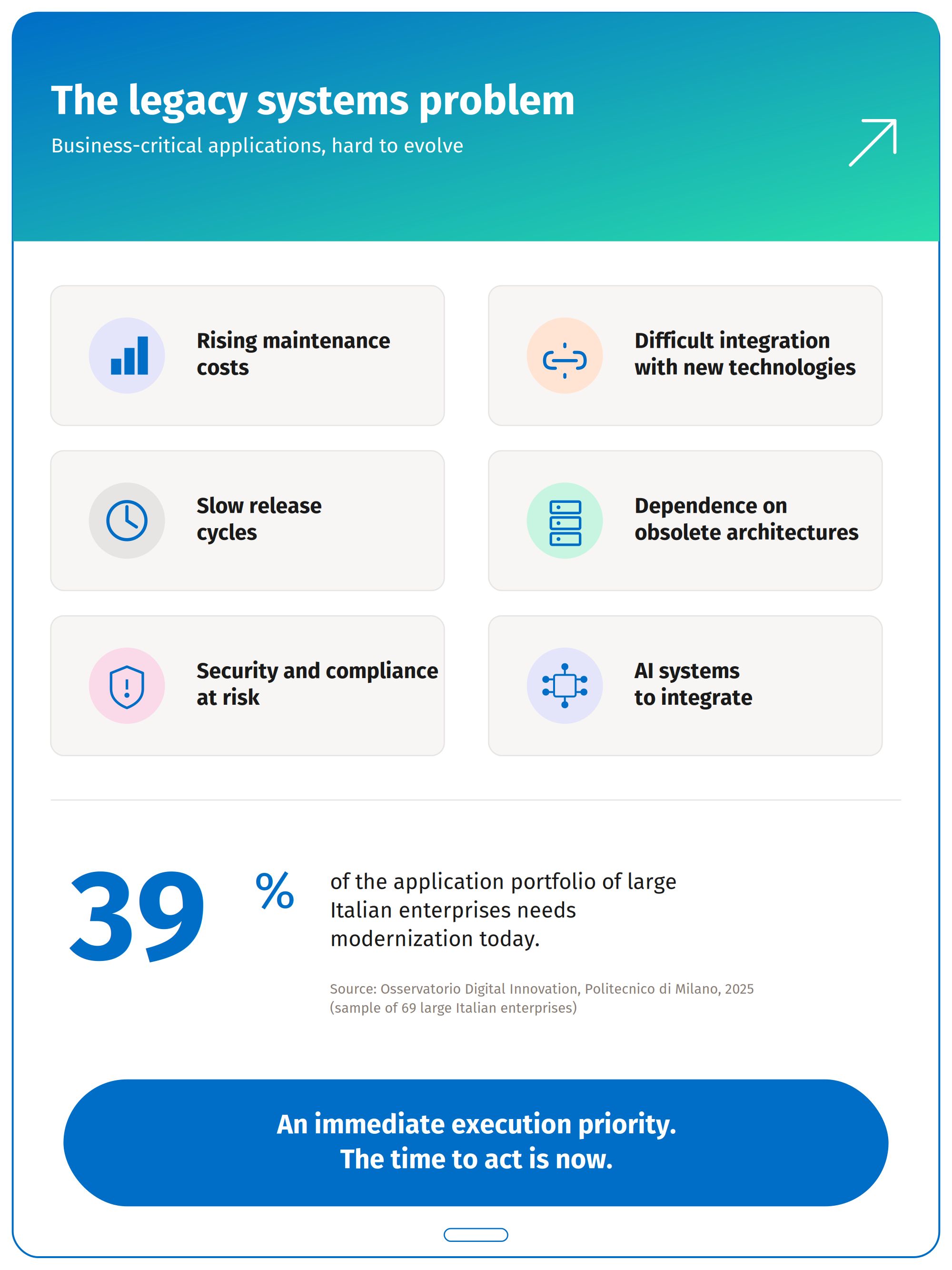
Many organizations today find themselves managing applications developed years ago, often critical to the business but difficult to evolve.
Among the most common challenges:
- increased maintenance costs
- difficulty integrating with new technologies
- slow release cycles
- reliance on obsolete architectures
- difficulty ensuring security and compliance
- need to integrate AI systems
Continuing to maintain legacy systems without evolving them can limit innovation capacity and increase operational risk.
According to the Digital Innovation Observatory of Politecnico di Milano, 39% of the application portfolio of large Italian companies today requires modernization. (Digital Innovation Observatories, PoliMi, 2025, based on a sample of 69 large Italian companies). This data makes modernization not a long-term strategic option, but an immediate execution priority.
Application modernization as a prerequisite for Agentic AI
Before integrating Agentic AI, applications must be ready to embrace it. Legacy, monolithic systems, with data trapped in proprietary formats and implicit dependencies, present an opaque environment that is difficult to query and integrate reliably for any agentic system.
Modernizing therefore means much more than a technological update; it is the enabling condition to fully exploit the opportunities offered by Agentic AI.
A cloud-native architecture, API-first, with well-defined microservices, offers Agentic AI exactly what it needs: predictable interfaces, clear semantic context, governable data.
Every choice made in the modernization path, from decomposition in bounded context to exposure of documented APIs, is also a choice of AI readiness, as the two paths coincide in practice.
What is application modernization
Application modernization is a transformation involving both Business and IT. The real drivers are both technological and organizational, and the process, if well set up, reduces silos and aligns the objectives between teams.
Companies launch modernization programs when clear signals emerge, for example:
- slow delivery and difficulty automating releases
- operational continuity risks on core applications
- growing technical debt and high maintenance costs
- stricter security and compliance needs
- need to scale teams and functionalities without losing control
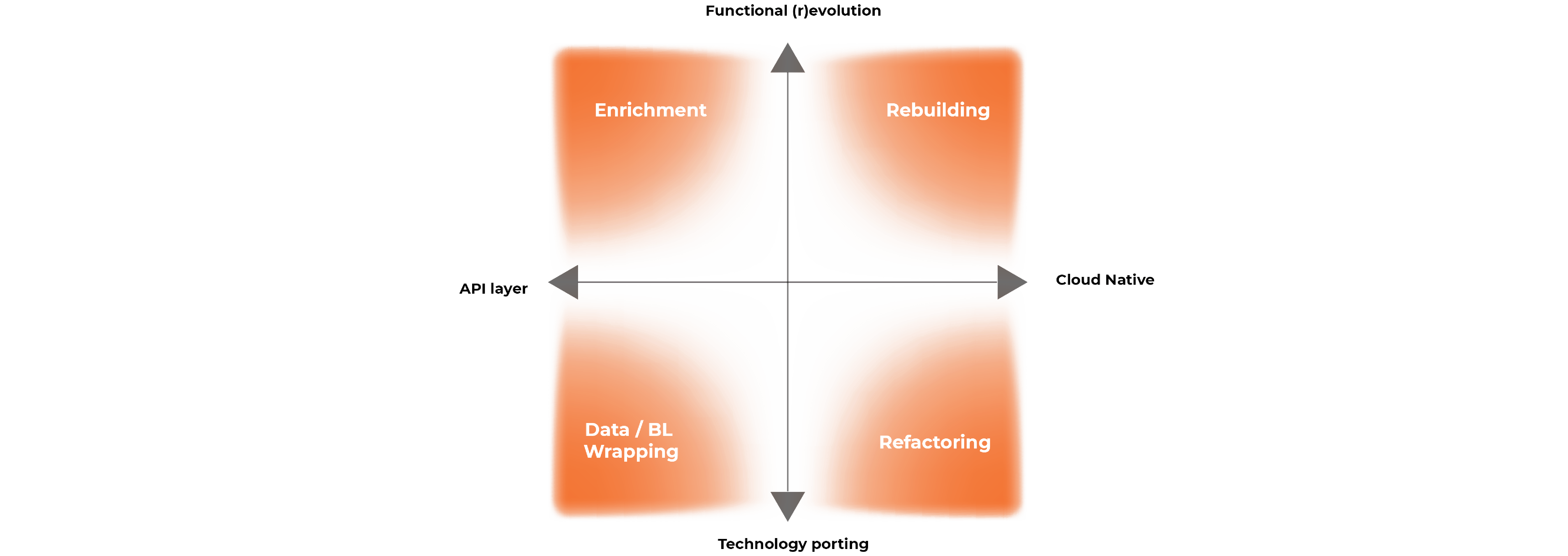
Modernization sometimes coincides with a technical porting, which maintains the same use cases, but it is more often also an opportunity to rethink and evolve application functionalities, to respond to business needs that have been blocked for years due to the difficulty of satisfying them with old rigid systems.
From an architectural standpoint, it is possible to opt for a radical intervention towards a cloud-native architectural model or for a more gradual approach, initially preserving the current data model and/or business logic, encapsulated in an API layer to enable renewal of user experience, expansion of consumption channels, functional extension and integration with other applications.
Essential DevOps practices and tools are also adopted DevOps both at the project stage and for subsequent management (test automation, CI/CD, container orchestration, log collection, monitoring).
adesso.it over the years has developed its original methodology and a set of tools to support application modernization. These tools, together with the latest AI-based technologies, and combined with the Agile methodology, can reduce time and costs and ensure an incremental and iterative approach oriented towards value generation.
Agentic Coding: how adesso.it applies it to application modernization
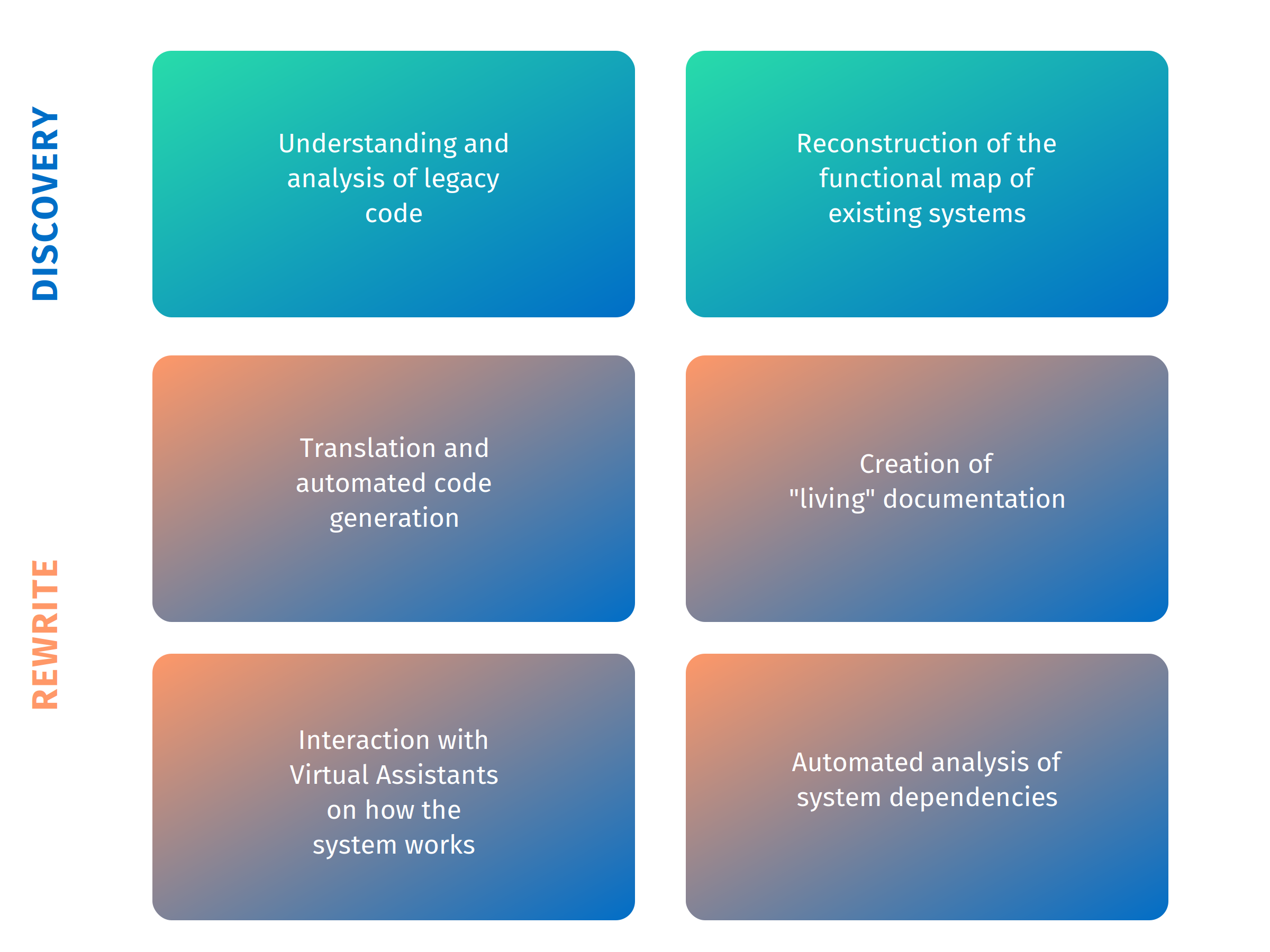
Agentic Coding, where people define the intent, architecture and acceptance criteria, and agents plan and write the code is transforming the way legacy application modernization is tackled. adesso.it has been applying it since the Discovery phase, where it analyzes code even in the absence of updated documentation or available original skills, reconstructing the functional map of existing systems.
In the Rewriting phase, Agentic Coding supports the translation and automatic code generation and produces live documentation, consultable in natural language by developers and stakeholders.
Dependency analysis assisted by Agentic Coding identifies the most effective bounded contexts for the transition to microservices architecture, favoring autonomy and decoupling between teams.
The Agentic AI is shifting the balance of make-or-buy choices in application modernization, reducing investments, times, and risks to the point of making it feasible even where in the past the cost would have leaned towards a packaged solution while maintaining customization space and data control. This is evident in concrete cases followed by adesso.it: from the replacement of an e-learning SaaS platform with a custom solution developed by a small team alongside AI agents to the modernization of a mobile banking platform migrated from a Java EE monolith to microservices Spring Boot and Kafka on Kubernetes, up to the transformation of a B2B/B2C e-commerce platform with over three million lines of code.
adesso.it integrates Agentic Coding into its application modernization projects with the same rigor of governance, quality, and operational continuity described on this page.
For further exploration, please refer to this article.
The three dimensions of modernization
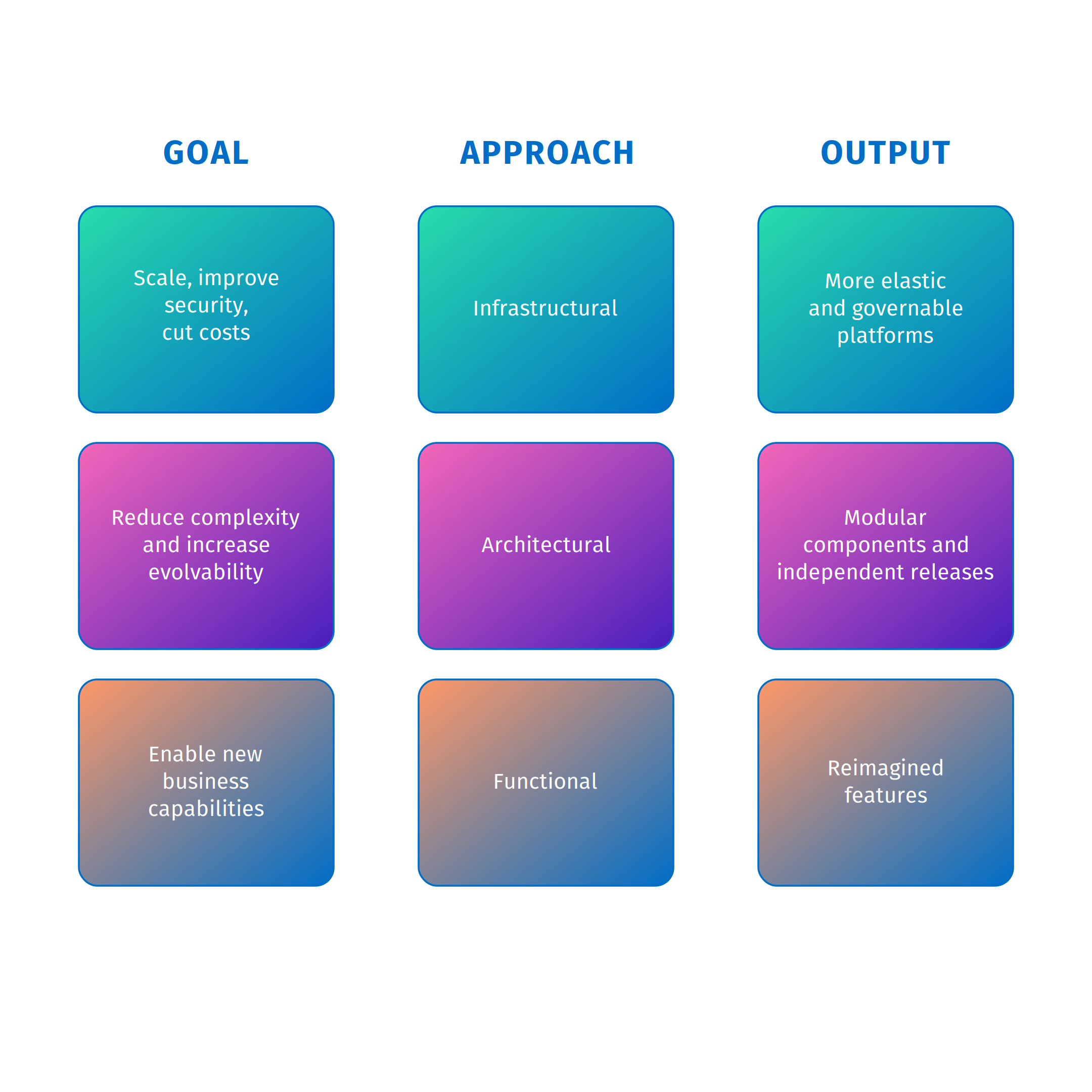
Depending on the needs to be addressed, an application modernization project can address three complementary dimensions, often activated in combination to ensure lasting results.
1. Infrastructure Modernization
Updating the infrastructure towards cloud or hybrid environments, with objectives of improved scalability and security, reduced operational costs, and lower vendor dependency.
2. Architectural Modernization
Redesigning the application architecture towards cloud-native paradigms to achieve more usable, evolvable, and scalable applications over time.
3. Functional Evolution (full transformation)
Extension and redesign of application functionalities to support the business in market competition with a modern and future-ready application.
The key challenges to address
The experience gained over the years of adesso.it's teams has enabled the company to guide each modernization path while maintaining the balance between technological evolution and operational continuity.
In modernization projects, recurring challenges include: prioritization and value generation, knowledge sharing, product quality, technological and architectural choices, business continuity, team scalability, metric-based governance, and transparent collaboration. adesso.it addresses each of these challenges by helping clients create value.
In the following paragraphs, we will analyze the 7 knots that, if correctly addressed, make the application modernization process a new asset for the business.
1 Metric-based governance and transparent collaboration
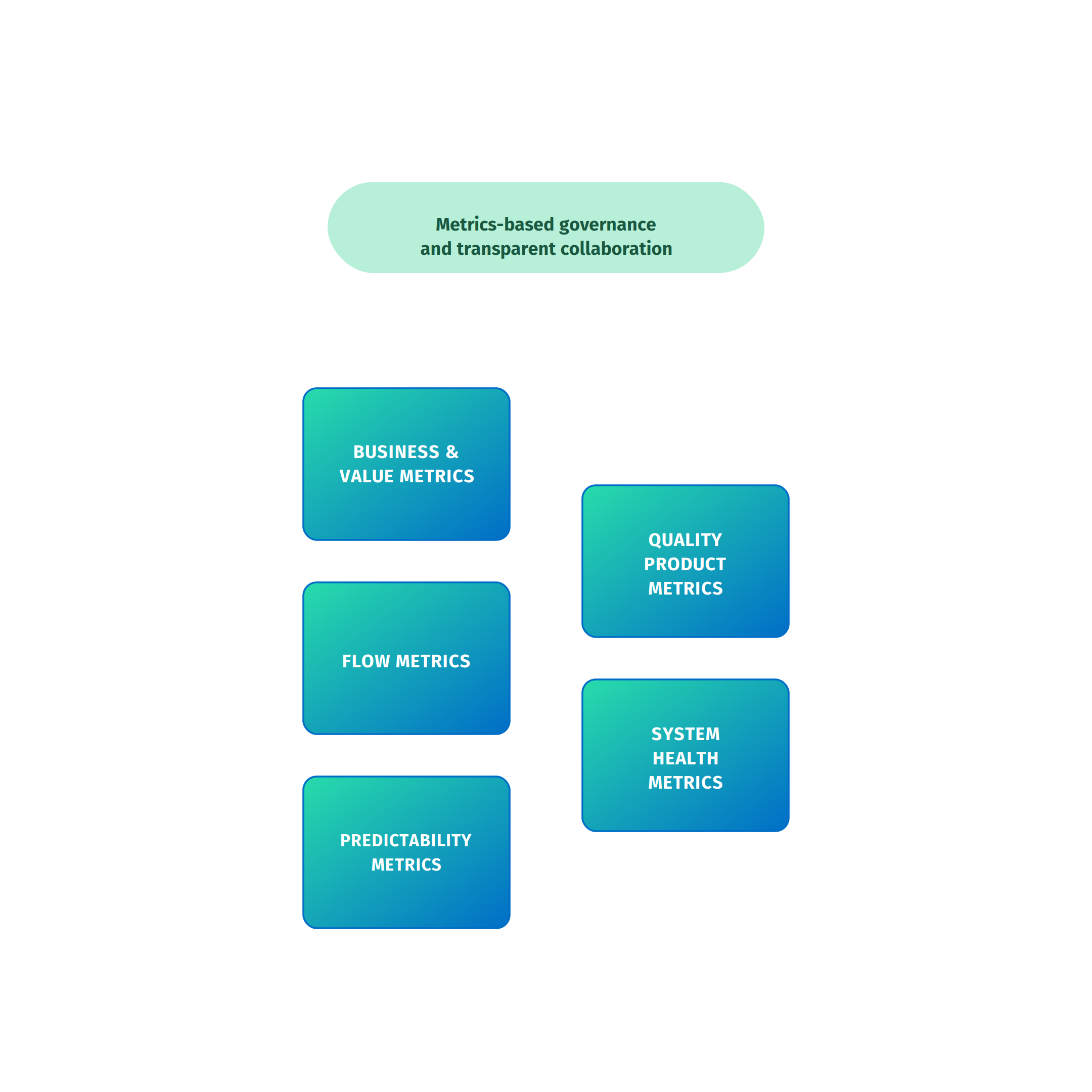
An application modernization path cannot ignore a solid, measurable, and transparent governance from day zero. adesso.it tackles this challenge by defining KPI values from the setup phase that allow management to make informed decisions based on real and always available data. The metrics system adopted by adesso.it is articulated on five dimensions: Business & Value Metrics for visibility on generated value, Flow Metrics for identifying bottlenecks in delivery, Predictability Metrics to reduce uncertainty and align stakeholder expectations, Quality Product Metrics to monitor product stability, and System Health Metrics to prevent downtime and production environment degradations. This approach enables companies to transform application modernization from an opaque project into a measurable investment with verifiable returns sprint after sprint.
The initial setup is a crucial phase: it defines the KPI values that enable informed decisions, based on transparent and always available information.
2 Business Continuity in application modernization
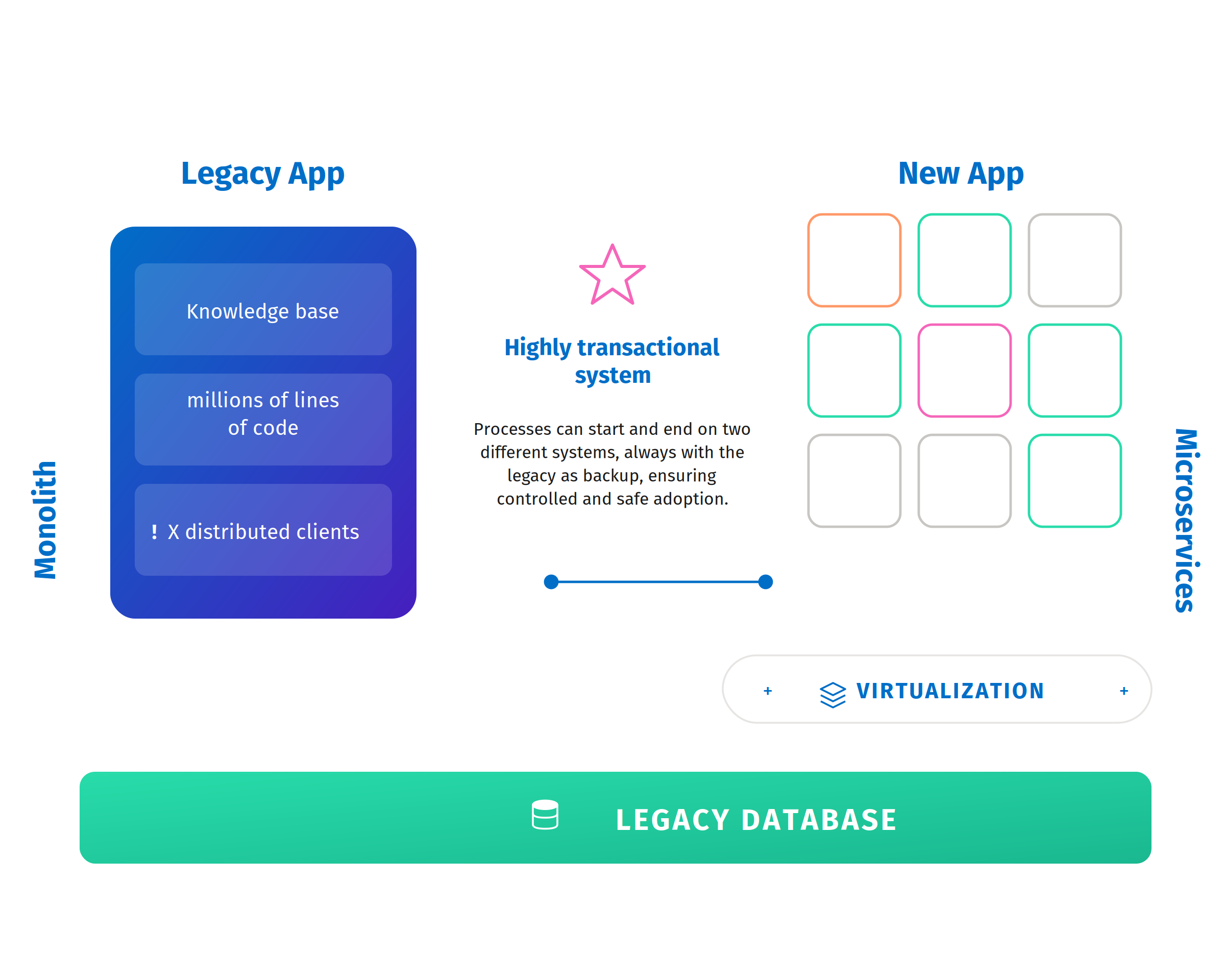
One of the most common and costly mistakes in application modernization projects is the “Big Bang” approach: the complete replacement of the legacy system in a single solution. adesso.it considers this approach excessively risky for core business applications, as it exposes the organization to operational disruptions that are difficult to accept. The working method of adesso.it to ensure business continuity during modernization is based on two complementary principles: the progressive and incremental migration of application components, and the parallel management of the legacy system and the new solution during transition phases. As the guiding principle of adesso.it states, it is about “changing the engine on the plane in flight”: the most serious failures in modernization projects almost always stem from wrong or underestimated technological choices in managing operational continuity.
*Note: in the figure next to it, one of the approaches of *adesso.it is described for ensuring business continuity. The approach is adaptive to the specific case and depends on the client’s peculiar context. In the represented infographic, a method is described to guarantee coexistence between legacy (monolithic core system) and new (microservices architecture), with a virtualization layer above the legacy database.
3 Priority Management and Value Generation
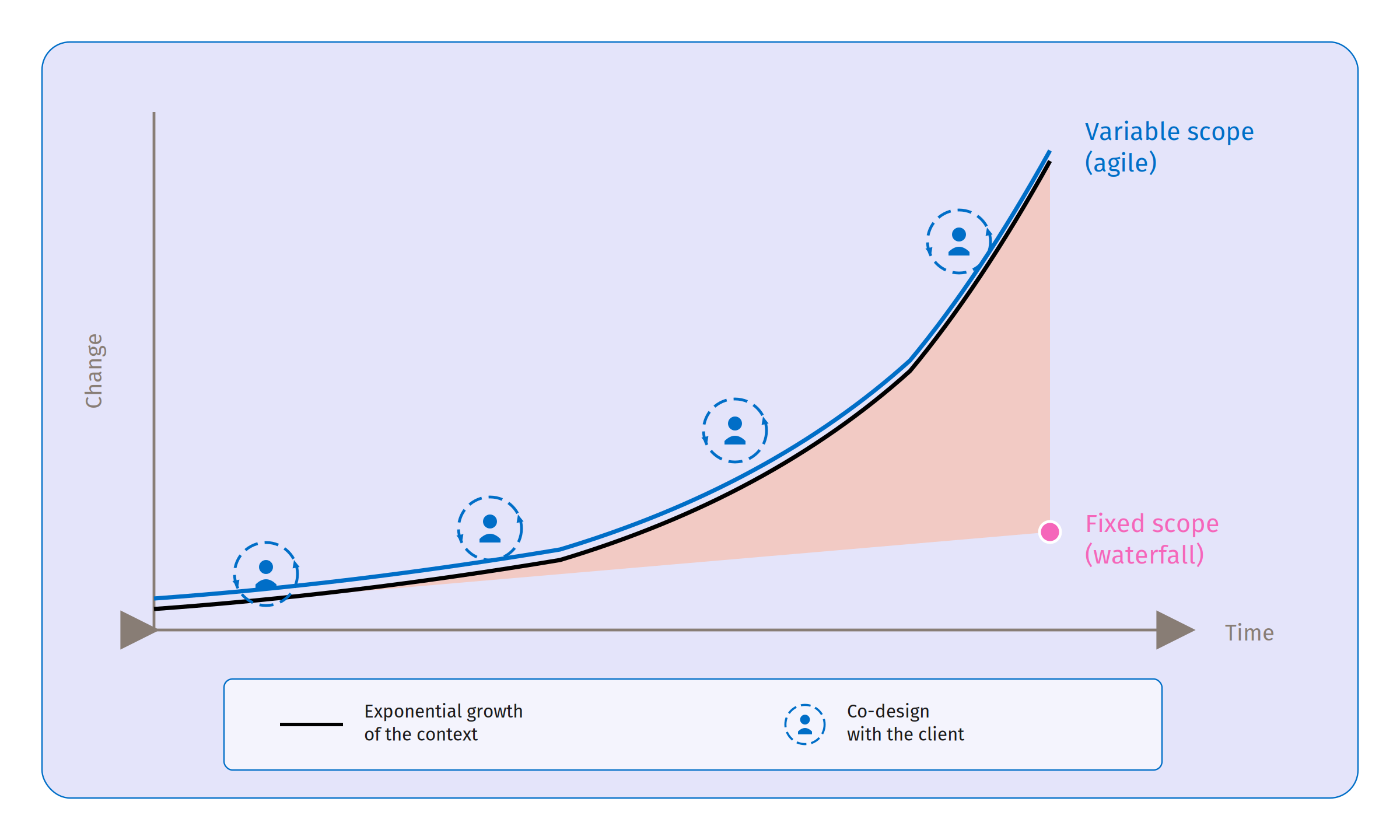
Application modernization generates real value only if the business is an active part of the decision-making process, rather than just an external client. adesso.it adopts an agile and iterative approach to priority management, allowing tangible results to be produced from the first iteration, avoiding the limitations of fixed scope typical of waterfall models.
Updating and maintaining the backlog, continuous monitoring of business KPIs and an iterative project pipeline allow priority to be adjusted based on contextual changes that grow exponentially over time in any modernization path.
Co-design with the client is not a methodological option: for adesso.it it is the necessary condition to transform modernization into an engine for generating competitive value.
4 Knowledge Sharing and Dissemination
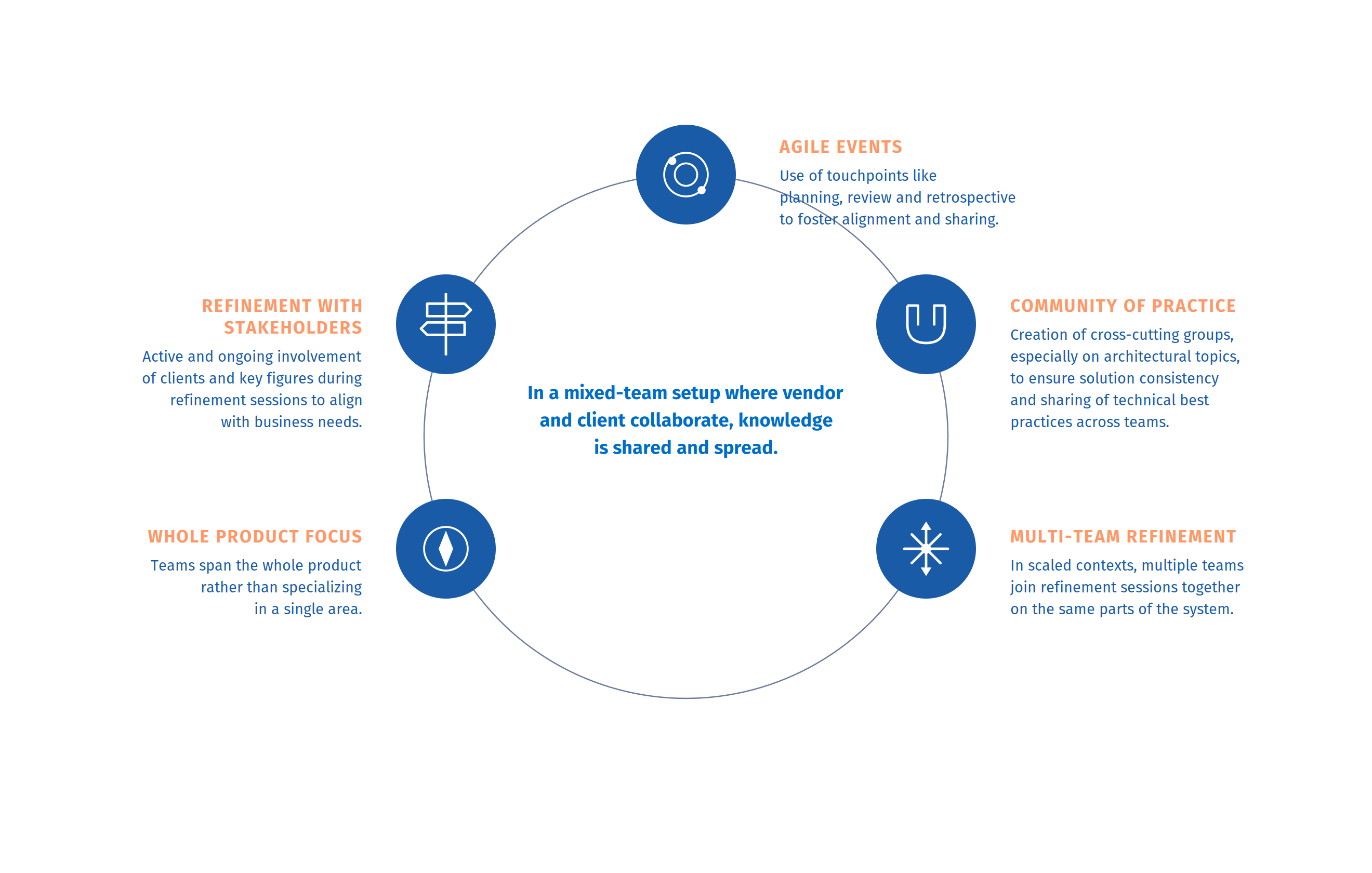
In application modernization projects involving mixed teams, with supplier resources and client internal resources collaborating on the same product, knowledge management is a critical variable often underestimated. adesso.it structures the sharing and dissemination of knowledge through four systemic mechanisms: agile events (planning, review, retrospective) as moments of continuous alignment; cross-team Community of Practice to ensure architectural solution uniformity among different teams; multi-team clarification sessions for scaled contexts; and a Whole Product Focus approach that prevents team verticalization on single areas, promoting an integrated vision of the product. This way, knowledge does not remain the supplier's heritage but becomes firmly rooted in the client's organization.
A concrete example of this approach is described in this application modernization case study for Alpitour World
5 Team Scalability in Modernization Projects
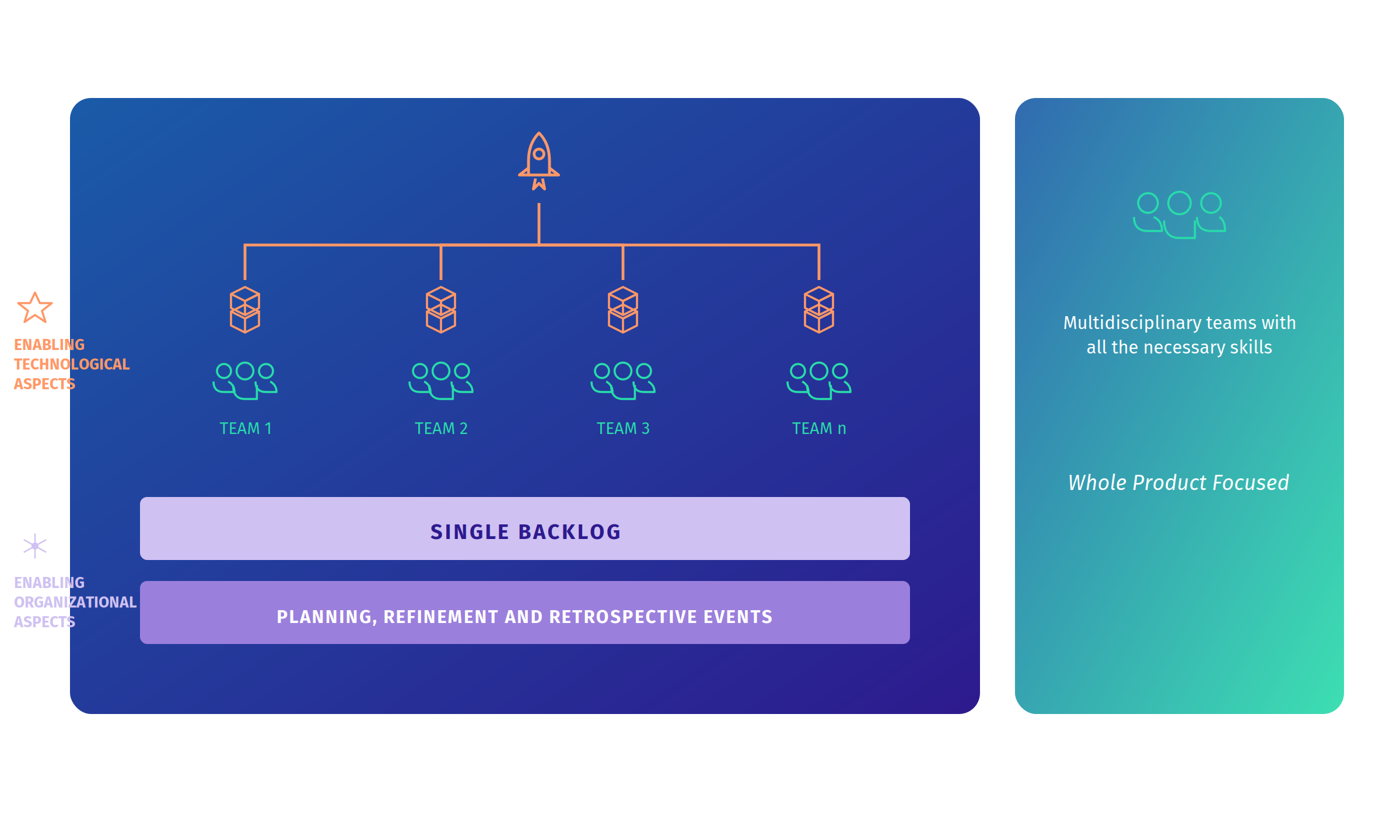
Scaling an application modernization program across multiple teams without losing coherence, speed, and quality is one of the most complex organizational challenges a CIO faces. The model of adesso.it involves multidisciplinary teams with all necessary skills, both technical and functional, operating in a coordinated manner through a single shared backlog and synchronized events of planning, clarification, and retrospectives. On a technological level, the enablers selected by adesso.it ensure that each team can work autonomously within its domain without introducing blocking dependencies. Organizationally, the Whole Product Focused model ensures that each team maintains a comprehensive product vision, reducing the risk of local optimizations that penalize the global quality of the system.
6 Technological and architectural choices
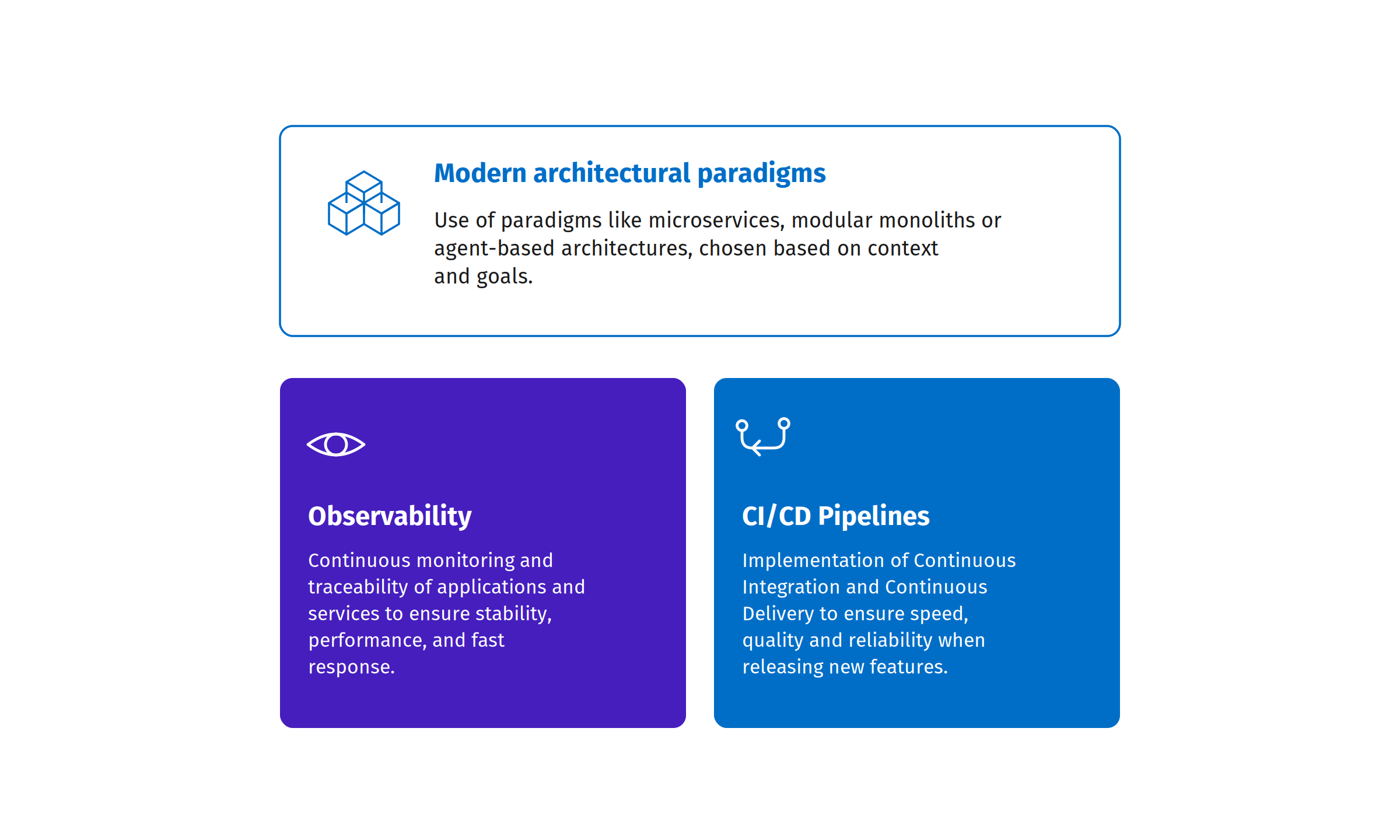
Technological and architectural choices in a modernization project are not solely based on technical factors: they result from a multidimensional analysis that adesso.it conducts considering available budget and resources, the client's internal competencies, existing architectural roadmap, technologies already present in the company, time constraints, and business goals. Regardless of the specific context, adesso.it applies three invariant architectural principles: the adoption of modern paradigms like microservices, modular monoliths, or agent-based architectures chosen based on objectives; the implementation of CI/CD pipelines to ensure speed, quality, and reliability in the release of new features; and an Observability strategy that ensures constant monitoring and traceability of applications to prevent degradation and guarantee the ability to act quickly in production.
7 Product quality as a strategic asset
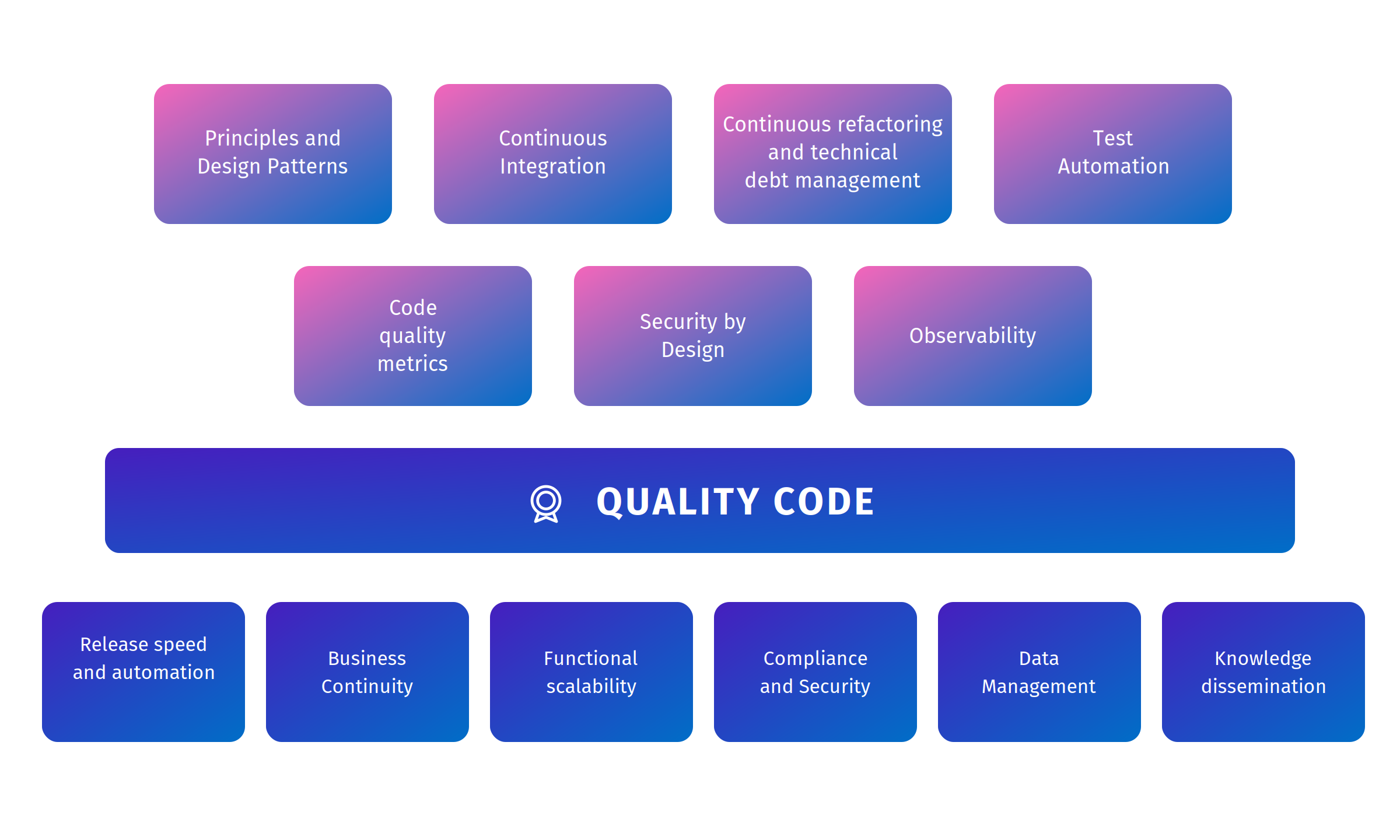
Software quality is not a result achieved at the end of the project: it is a property that is systematically built along the entire modernization journey. adesso.it ensures product quality through an integrated set of engineering practices, principles, and design patterns, continuous integration, continuous refactoring and active management of technical debt, test automation, code quality metrics, security by design, and observability, which converge in the production of verifiable quality code. This approach translates into concrete and measurable benefits for the business: increased speed and automation in the release, guaranteed business continuity, functional scalability, compliance, and security by design, structured data management, and organic spread of technical knowledge within the client organization.
Many failures in modernization projects stem from wrong or underestimated technological choices. To reduce risk, a solid initial setup, a progressive roadmap, and governance based on metrics that make value, quality, and system health visible from the start are needed. adesso.it guarantees all these elements.
Benefits of application modernization with Agentic coding
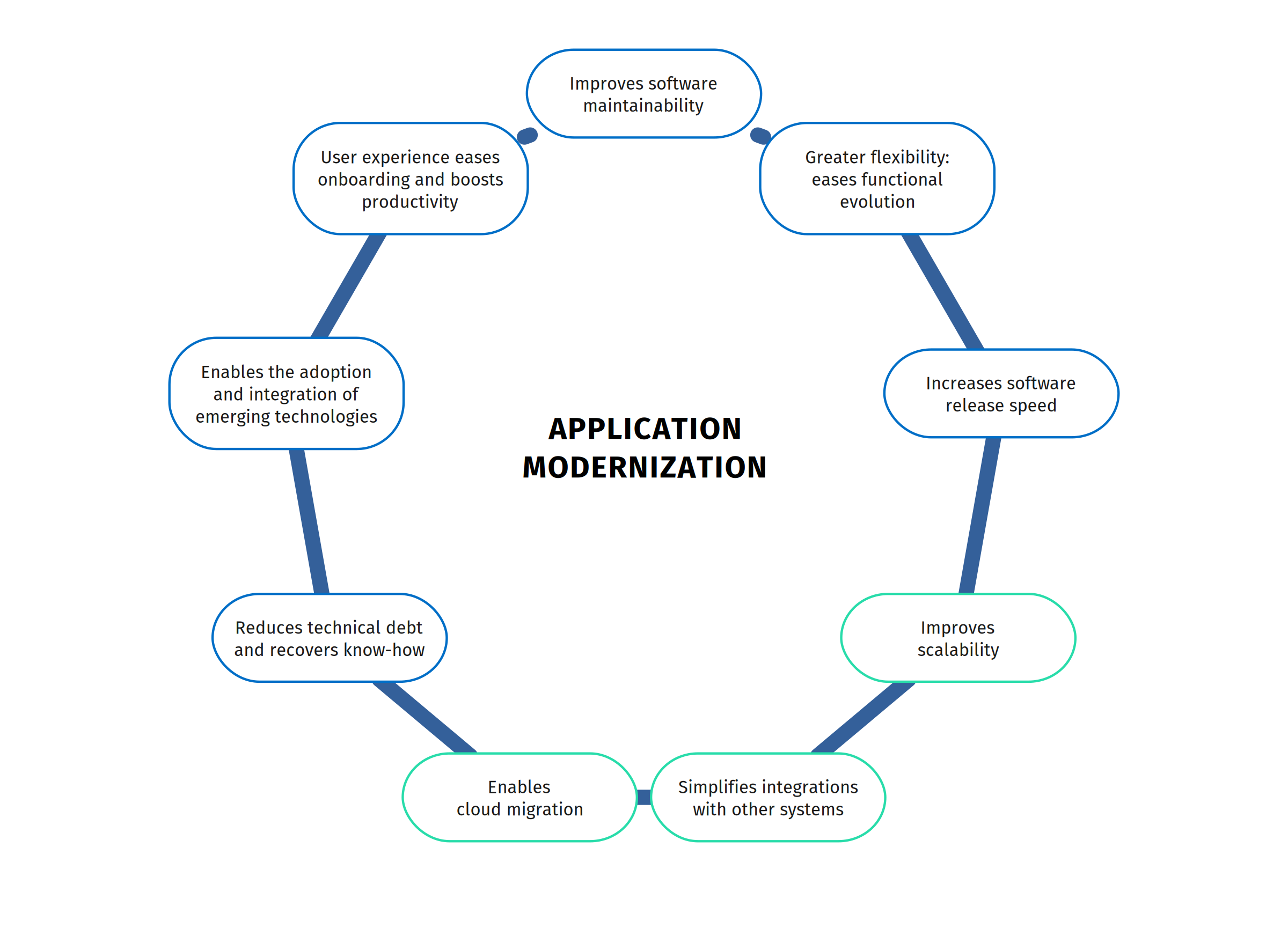
Application modernization with Agentic coding is a strategic lever to ensure operational continuity and support business evolution. It reduces maintenance costs related to accumulated technical debt and vendor dependence by updating to cloud or hybrid environments. It shortens release cycles through CI/CD pipelines, test automation, and decoupled architectures, allowing for quicker responses to market changes. It makes applications more robust in the face of increasing regulations and risks thanks to security by design and structured observability. It is also an attractiveness factor for talent, as working on modern architectures integrated with Agentic AI makes teams more capable of attracting and retaining skills. Finally, it is a fundamental enabler for the integration of new technologies, allowing one to fully grasp the benefits offered by solutions based on Agentic AI and GenAI.
Frequently asked questions about application modernization and Agentic Coding
1.What is application modernization?
Application modernization is the process by which a company evolves legacy software systems to make them more scalable, secure, faster to release, and ready to integrate AI. It intervenes on three dimensions: infrastructure, architecture, and functionality, often progressively, without requiring a complete rewrite from scratch.
2.When is it worthwhile to modernize a legacy application?
It is worthwhile to modernize when maintenance costs surpass the evolutionary value of the system, releases become slow, integration with cloud, data, and AI is complex, or the application's stability poses an operational risk. According to the Digital Innovation Observatory of the Politecnico di Milano, 39% of the application park of large Italian companies today requires modernization intervention (2025).
3.Are application modernization, cloud migration, and digital transformation the same thing?
No. Cloud migration is a component of application modernization, it does not exhaust it: an application moved to the cloud without architectural evolution remains a legacy system. Digital transformation, in turn, depends on application modernization as a prerequisite: without evolvable systems, digital initiatives do not generate value.
4.What is Agentic Coding and how does it apply to application modernization?
Agentic Coding is software development where people define intent, architecture, and acceptance criteria, while AI agents plan, write, and verify the code.
5.How is the success of an application modernization measured?
Success is measured by technical and business metrics: release speed, software quality, system stability, delivery predictability, and value generated. The most effective programs are not monolithic projects but progressive journeys with incremental releases: the first optimizations often emerge within the first few months, while complete transformation requires multiple phases.
6.What are the main risks and how is operational continuity ensured?
The main risks are inadequate technological choices, lack of governance based on metrics, and poor collaboration between business and IT. For core applications, the safest approach is progressive migration, with the legacy system remaining active as a fallback during the transition, avoiding the "Big Bang" approach of complete replacement.
7.How to choose the right partner for an application modernization project?
A suitable partner has experience with complex systems, architectural competencies on cloud, microservices, API, and CI/CD, multidisciplinary teams capable of working on a shared backlog, and a governance model based on metrics from day zero. In the medium term, well-conducted modernization reduces maintenance costs and increases the organization's ability to innovate.
Essential Glossary
- Legacy system: existing application with evolutionary constraints and technical debt
- Debito tecnico: hidden cost of trade-offs that slow down delivery and quality
- CI/CD: automation of integration and release for speed and reliability
- Observability: monitoring and traceability for stability and quick intervention
- Bounded context: business domain for organizing services and data
- Whole product focus: non-vertical teams, focus on the entire product
- Agentic Coding: software development where people define intent, architecture, and acceptance criteria and AI agents plan, write, test, and fix the code
Bibliography
- DX, “Highlights from the 2024 DORA State of DevOps Report”, 2024. Available at: https://getdx.com/blog/2024-dora-report/.
- Salesforce, “2025 Connectivity Benchmark Report”, MuleSoft, 2025. Available at: https://www.mulesoft.com/resources/api/connectivity-benchmark-report.
- McKinsey & Company, “The cornerstones of large-scale technology transformation”, 2018. Available at: https://www.mckinsey.com/capabilities/tech-and-ai/our-insights/the-cornerstones-of-large-scale-technology-transformation.
- McKinsey & Company, A. Tavakoli, B. Goodman, K. Rowshankish, A. Kumar, H. Soller, “Building the Foundations for Agentic AI at Scale”, April 2, 2026. Available at: https://www.mckinsey.com/capabilities/mckinsey-technology/our-insights/building-the-foundations-for-agentic-ai-at-scale
FIND OUT MORE
Fill the form
if you would like more details
form version: 1.0.0